The age of robots
What we are looking for in robotics, and the bottlenecks we would like to fund
Useful robots will take on the physically demanding, dangerous and tedious work that people would rather not do. Cheaper physical production will push down the cost of manufactured goods and food, and make good products accessible to many more people. We are very excited about this future and would like to help accelerate it.
This piece is an open invitation to founders. It explains how we look at robotics companies, the three bottlenecks we most want to fund, and the thread we see running through all of them. If you build robots, or the software and systems around them, it is written for you.
How we frame it: robots spread when the ROI is unambiguous
We believe robots, like most technologies, spread fast only when their return on investment is obvious to the buyer. So instead of focusing on capabilities alone (aka “cool demos”), we focus on unit economics. We look at a robotic use case as the whole system around the robot, not only the robot itself.
A simplified ROI of a robot, measured over one year of operation, has three terms:
- Productivity (value per task ÷ time per task) is the value the robot creates in each hour it works.
- Autonomous hours are the hours it does useful work without a person on site. Hours rescued by a remote operator still count, but that operator's time is a cost.
- Deployed cost is everything the robot costs per year: its share of purchase or lease, integration and commissioning, maintenance, spares and remote supervision.
Almost every robotics pitch we see claims to improve the first term through raw capability: this robot can do a harder task than the last one. We think raw capability is no longer the scarce part. The leverage today is in turning a capable model into reliable work on one specific job, and in the other two terms.
Each of these terms is set by hardware and software together. A sensor decides what a model can learn, a joint decides how often the robot needs rescuing, and a capable model decides how cheap and imprecise the hardware can afford to be. The companies we most want to back treat the robot, its data and its model as one system. The three bottlenecks below are three places where this plays out.
What we are looking for
- Companies that move one of the three terms by an order of magnitude. A 10x gain on one term matters more to us than small gains on all three.
- Companies co-designing software, hardware and systems together. Several of our favorite ideas below do not involve building a robot at all.
- Founders who can talk about unit economics. If you are not yet deployed, the economics of your first target deployment, with your assumptions, are enough.
Bottleneck 1: turning a general model into one reliable job
We want to fund the layer that turns a general-purpose robot model into something that reliably does one valuable job in one real environment.
Most of us are amazed every few months by new robot videos: humanoids boxing each other, running a half marathon in Beijing, or doing flips. They show how far robot control has come in a few years. But they highlight one parameter, the complexity of the task. Economic value depends on reliability, speed and cost on a real job too.
We think the edge of closed frontier models over open ones will shrink over time, as it has in language models. Nvidia, Meta and Physical Intelligence have already released open robot models. We expect exceptions in domains such as autonomous driving and surgery, where safety requirements and data costs stay very high. Outside those, the remaining gap is between a general model and a useful task, and closing it takes specialized data and adaptation. That gap is where we want to invest, and where we have already invested in Reward AI.
Hardware is part of closing that gap. The cheapest task data often comes from capture devices designed around the robot, such as the UMI handheld gripper or the capture gloves Sunday Robotics trains on. And the sensors a robot carries decide which skills a model can learn at all.
What we would love to see
- Fast, cheap task-specific data: teleoperation rigs and capture gloves designed to mirror the robot, human demonstration capture, and simulation-to-real pipelines that actually transfer.
- Cheap model adaptation: fine-tuning and evaluation infrastructure that takes a foundation model to production reliability on a new task in weeks rather than quarters.
- Data flywheels owned by the fleet operator, where every hour worked makes the next hour more productive.
- Sensors and actuators built for learned control: durable tactile skins, in-hand cameras and backdrivable joints, with the data pipeline to use them.
- Specialized frontier models in the hard, high-value domains where open models will not catch up soon.
Bottleneck 2: keeping robots working
We want to fund the software that keeps fleets of robots working, and the businesses that make autonomous hours their product.
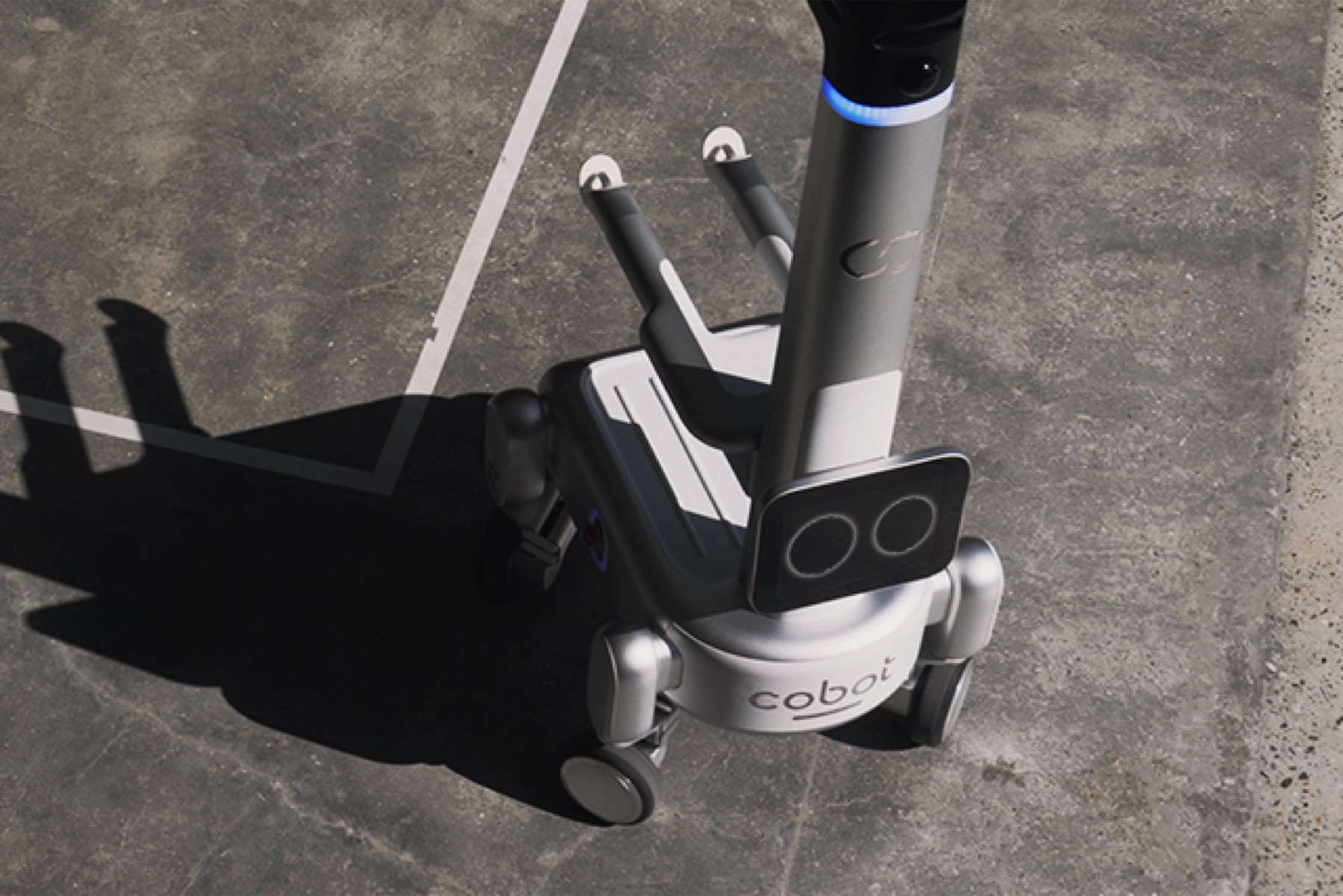
Autonomous hours are one of the most underrated drivers of a robotics company's viability. Every robot gets stuck. What matters is how often, how often it recovers on its own, and how fast a person or a system can get it working again when it cannot. That depends on the robot's degrees of freedom (can it move the obstacle in front of it?), on how gracefully its hardware and software handle faults, and on the processes for repairing or replacing robots in the field.
In many deployments we see, the system around the robot is the binding constraint. Who troubleshoots it, how it is repaired or replaced, and the hundreds of small tools and processes that turn an impressive robot into a profitable operation. This work is unglamorous, and we think a lot of value will be created here. Recent models are good at triaging messy, never-seen-before situations from logs, video and operator notes, which can make remote recovery faster and field visits rarer.
Autonomous hours are also a hardware property. Figure 03 charges itself through coils in its feet, and 1X chose backdrivable joints so its robot can work safely in homes. Both remove whole categories of interventions before any fleet software gets involved.
What we would love to see
- On-the-ground infrastructure: sensors, processes and field intervention capacity that raise autonomous hours.
- AI-assisted remote recovery that cuts mean time to recovery, and remote operation tools that let one remote operator cover many more robots than today. (Teleoperation here is for recovery; teleoperation for collecting training data belongs to Bottleneck 1.)
- Predictive maintenance and field service logistics: spares, swaps and repair depots, the layer that often decides whether a deployment is profitable.
- Robots-as-a-service operators who take on the uptime risk themselves and win on operational excellence rather than on hardware.
Bottleneck 3: making deployment cheap
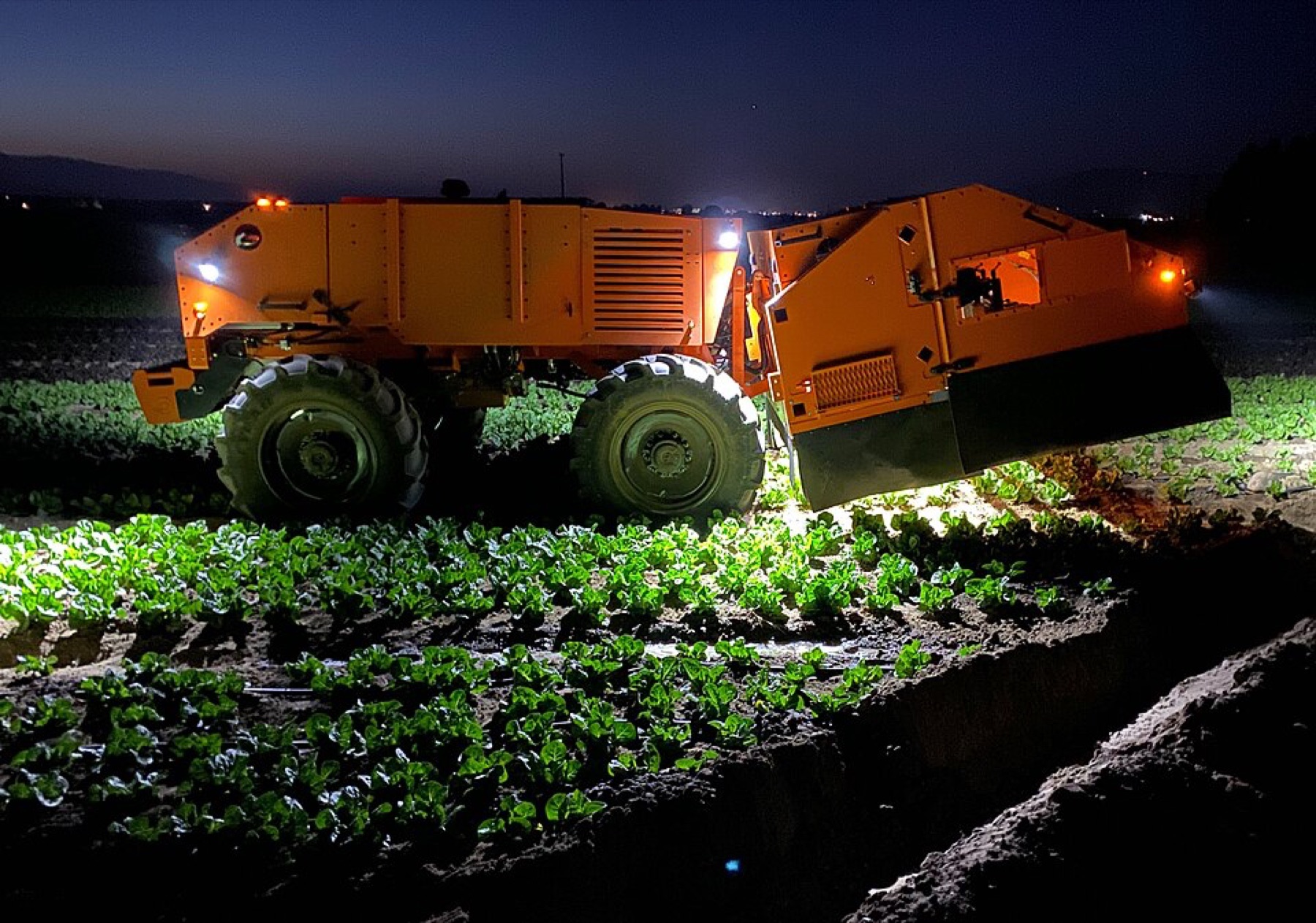
We want to fund whatever makes the cost of a deployed robot finally track the cost of its components.
The cost of the components used in robots has collapsed over the past two decades: lidars, batteries and electronics in general. Yet the cost of a deployed robot has come down far more slowly. Founders who have tried to scale know why. Most of the cost of putting a robot into commercial operation sits elsewhere: in assembling and testing each unit, and in integrating it with the site, systems and safety rules it has to work within. In the deployments we see, those costs have not fallen the way component prices have.
The gap is measurable. In cars, what the buyer pays is mostly parts: at BMW AG, the cost of materials was about 77% of revenue in 2025. In industrial robotics it is the reverse. NIST has estimated that integration costs two to four times as much as the robot itself, so the robot is only about 20 to 33% of a deployed system's cost, and its bill of materials is a fraction of that.
In cars the buyer mostly pays for parts. In industrial robotics most of the cost is integration, so the robot is only 20 to 33% of what is deployed.
Raising that share is one of the largest prizes in robotics, and AI-powered manufacturing, testing and integration offer a promising path to it.
Design choices made with the software in mind cut this cost too. Figure 03 moved from machined parts to die-casting and molding, and Unitree's in-house components let it sell a humanoid from $5,900. The last item below applies the same idea to the robot's onboard compute.
What we would love to see
- AI-driven assembly, calibration and end-of-line testing that takes the human hours out of building each unit.
- Design for manufacturing and design for service as a product, software or tooling that compounds rather than consulting, including tools that score a hardware change on policy performance, bill of materials and assembly time together.
- Integration tooling: connectors, safety cases, certification and commissioning that turn a twelve-week site integration into a twelve-day one.
- Contract manufacturing built for robotics volumes, in the gap between prototype shops and automotive-scale lines.
- Compute designed for robot workloads, the way Etched designs chips around one data-center workload: chips, compilers and runtimes built for robots' latency and power limits, lowering both the cost and the battery drain of onboard intelligence.
The thread through all three: hardware and software designed together
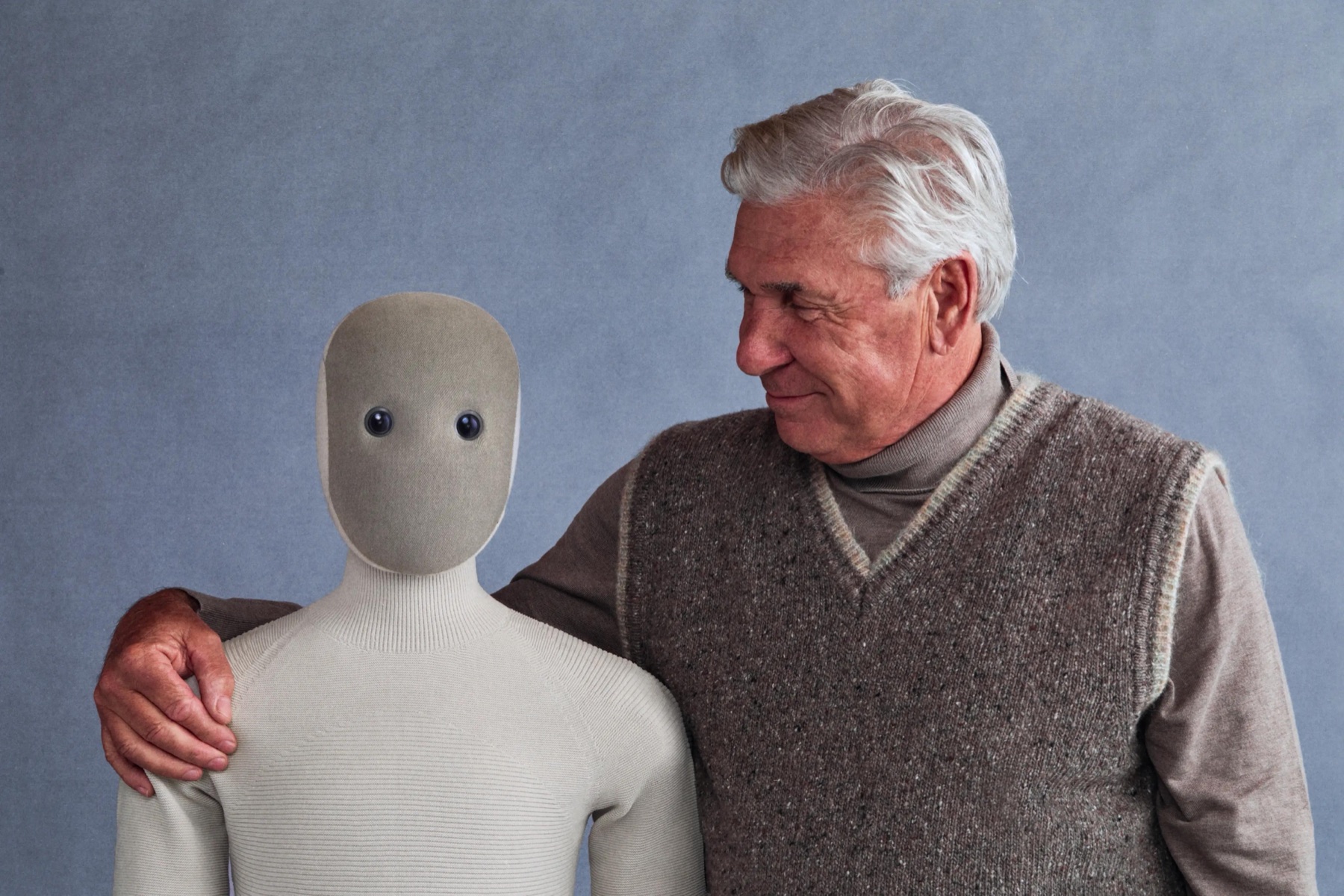
We think the best robotics companies will design hardware and software together, and that this matters more, not less, as robot intelligence becomes a commodity. If an open model can run on anyone's robot, the advantage moves to three places: hardware that gets more out of any model, data that only your hardware can collect, and skills that generic hardware cannot perform, such as tasks that depend on touch or very low latency.
The clearest examples move several terms of our formula at once:
| Term | What co-design changes | Example |
|---|---|---|
| Productivity | Cheap hardware made precise by learning | ALOHA: low-cost, imprecise arms reached 80 to 90% success on fine tasks from about 10 minutes of demonstrations. Mobile ALOHA cost under $32k, against more than $200k for comparable robots. |
| Productivity | Data capture designed around the robot | UMI, a handheld gripper, collects training data without a robot. Its approach now underpins Sunday Robotics, which credits the ALOHA and UMI research and reports about 10 million episodes from more than 500 homes. |
| Productivity and autonomous hours | Sensors and charging built for the model and the fleet | Figure 03 added palm cameras and tactile fingertips for its model, charges itself through coils in its feet, and uploads data while docked. |
| Autonomous hours | Actuators chosen for safety and learning | 1X uses low-gear-ratio, backdrivable motors, which make in-home operation and remote data collection safe enough to attempt. |
| Deployed cost | Design for manufacturing and vertical integration | Figure 03 moved from machined parts to die-casting and molding. Unitree makes over 90% of its core components in-house and sells a humanoid from $5,900, while reporting about 60% gross margin overall. |
What to send us
The promise of robots is held back today by much more than the raw capability we see in demo videos. We are excited about companies doing the unglamorous work of improving the economics of robotic tasks, through these three bottlenecks and the hardware and software that tie them together.
If you are building in any of them, we would love to hear from you. The most useful thing you can send us is not a demo video. It is one paragraph covering:
- Your unit economics today, or for your first target deployment if you are not deployed yet.
- Which term of the formula you move, and what you believe will change it by an order of magnitude.
- Which of your hardware choices exist because of your software, and which would break if you swapped in the best open model tomorrow.
- The assumption you are least sure about.
Sources
- Open robot models: Nvidia GR00T N1, Meta V-JEPA 2, Physical Intelligence pi0
- BMW AG Financial Statements 2025: revenues of €98,805 million and cost of materials of €76,465 million
- NIST, “Open Architecture Controls: The Key to Interoperability” (Nov 2000), on integration costing two to four times the robot
- ALOHA (Apr 2023) and Mobile ALOHA (Jan 2024)
- UMI (Feb 2024) and Sunday Robotics launch (Nov 2025)
- Figure 03 (Oct 2025)
- Eric Jang, “Motor Physics” (Aug 2024), on 1X actuators
- Unitree IPO coverage (2026) and Unitree R1 price (Jul 2025)
- Etched, “From zero to one” (Aug 18, 2026)