Agriculture

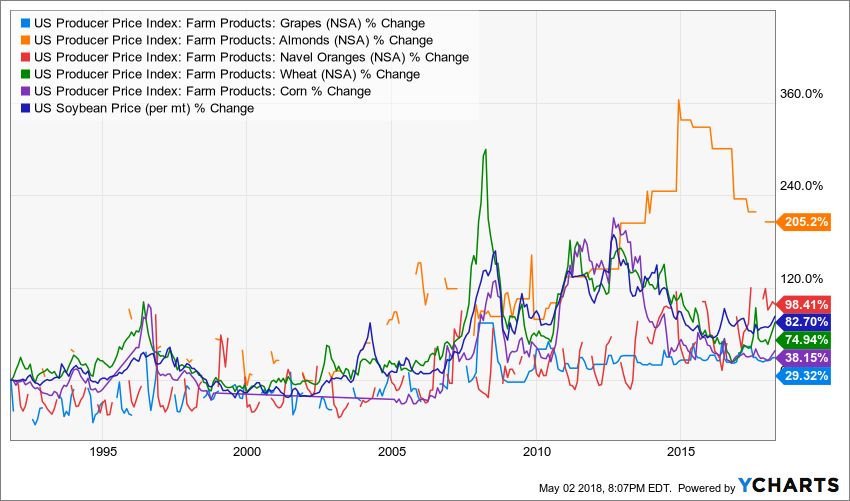
- Most agriculture commodities are trading lower than they did between 2005 and 2010
- Farmers are getting squeezed financially
- Row crop farmers want to reduce expenditure on material inputs and better manage risk
- Permanent crop farmers want to reduce labor costs
State of agriculture
The rise of seed prices
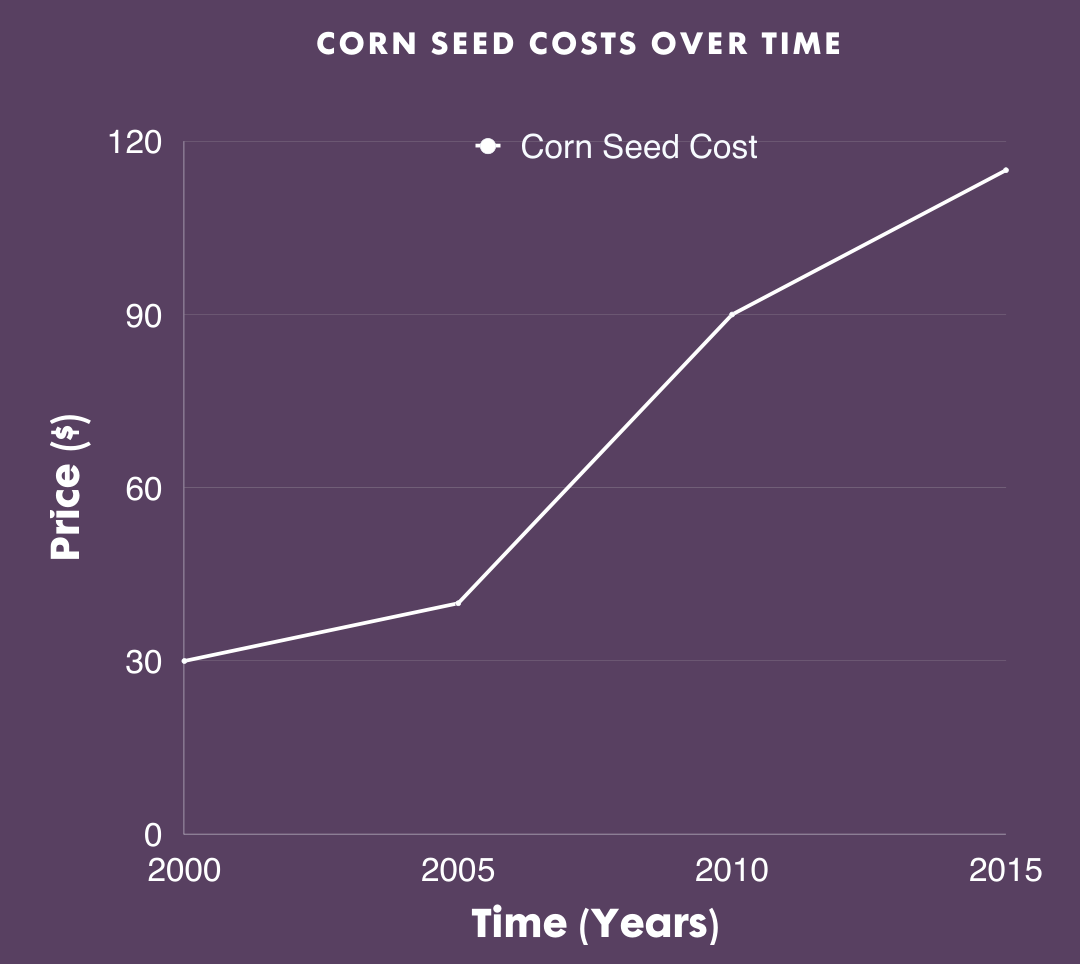
While fertilizer prices have been falling, seed prices have skyrocketed by over 300% for some crops.
The market power of monopolies like Monsanto and the shift to patented, genetically modified, seed has underscored the price hike.
Unfortunately it seems relief to this problem could only come from a new entrant willing to “disrupt” the major seed players with more economical genetically modified seed.
Outsourcing of services
Farmers are looking to outsource jobs to cheaper third parties. The long tail of farm machinery is often single functional and only able to address a niche, but necessary, need. Machines tend to be expensive and underutilized.
Outsourcing removes these burdens from land owners that increasingly demand less involvement in daily activities. Starting service businesses requires a technological cost advantage and an effective strategy for addressing geographical, operational and seasonal challenges.
The scarcity of labor
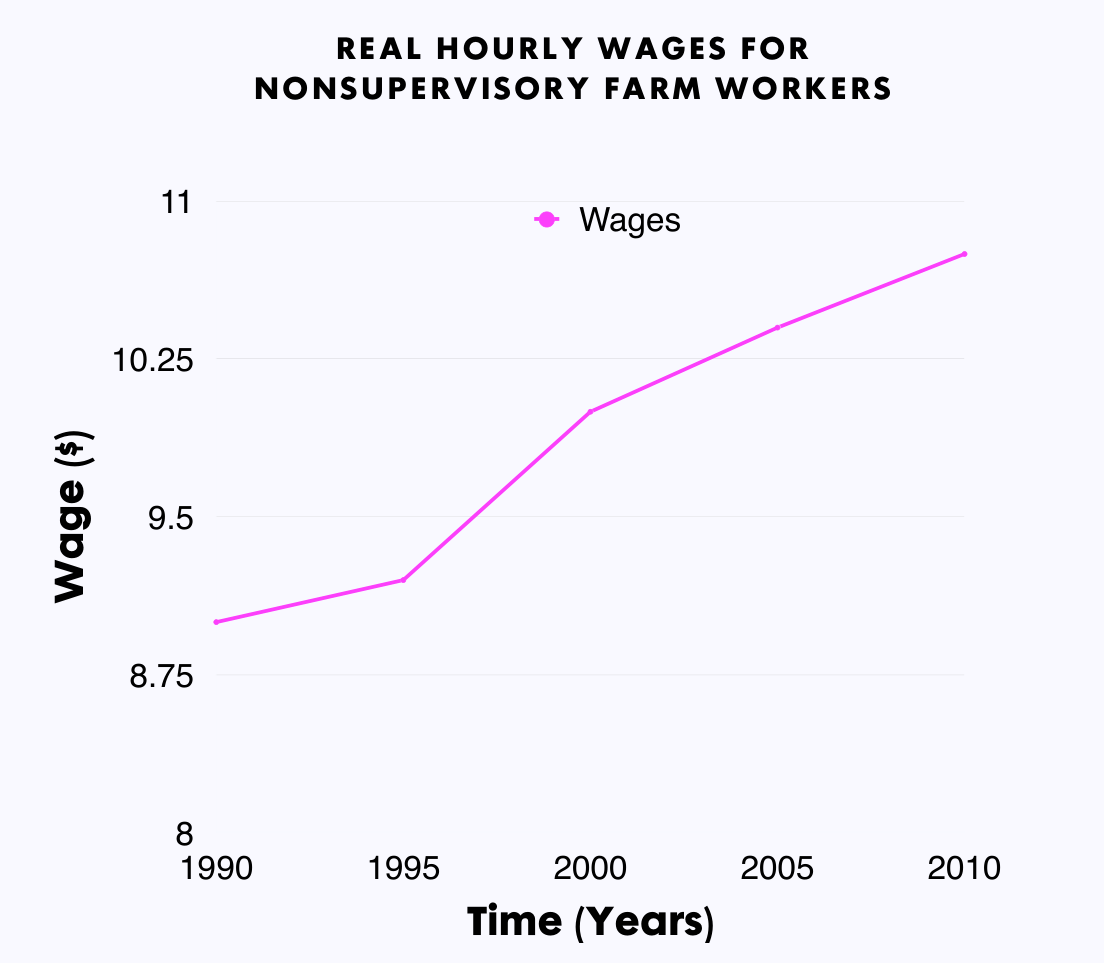
There’s simply not enough labor for permanent crops. The wages for the labor that does exist are going up, pinching low margin farmers in the process. And as political pressure mounts to address undocumented immigration, farmers are anxious that they’ll fail to secure the workers they need.
Robots that can take the place of these workers are in high demand but it’s tough to get bots to the performance levels necessary to handle diverse farm tasks.
Row crops: inputs
Corn
- Land Rent: Material Cost — 18% return/$230 per acre
- Irrigation: Material Cost — $163 per acre
- Starter Fertilizer: Material Cost — $152 per acre
- Sidedress Fertilizer: Material Cost — $145 per acre
- Irrigation: Labor Cost — $103 per acre
Wheat
- Wheat Seed + Starter Fertilizer: Material Cost — $100 per acre
- Pre-Plant Fertilization: Material Cost — $65 per acre
- Land Rent: Material Cost — 20% revenue on half acre/$60 per acre
- Irrigation: Material Cost — $45 per acre
- Stubble Management: Rental — $35 per acre
Soy
- Seed: $65 per acre
- Repairs + Fuel + Hire: $52 per acre
- Labor: $48 per acre
- Pesticides: $46 per acre
- Fertilization: $38 per acre
Material cost is king
The largest operational expenses for farmers on a recurring basis are material costs. This category of expenses includes various forms of fertilizer, pesticides and seed. Compared to permanent crops, pesticides are less of a factor. While fertilizer prices have been falling for some time, seed prices have been increasing dramatically, creating a major headache for farmers.
Labor is a minor factor
Automation has already clawed its way into most row crops. Though few vehicles are fully autonomous, they allow a small number of farm workers to tend ever larger farms. Unfortunately these improvements are incredibly cost intensive so farmers are looking for innovative financing and adoption solutions.
Land
As a greater number of farms move to cash rent and crop share agreements, whereby landowners attain some degree of financial interdependence with farmers, risk management is becoming a growing concern. Landowners aspire to outsource the labor intensive aspects of agriculture without compromising oversight while farmers aspire to benefit from upside potential without bearing the burden of inevitable downside.
The rise of outsourcing to reduce capital costs
Every farm is different in the number of tasks it is able to handle internally versus the number of tasks it outsources to third party service providers. Overall however, there is an increasing number of farmers that outsource individual tasks like harvesting, agronomic analysis, transportation and storage.
The difficulty in scaling a business in this space however is the geographic spread of operations, the extreme seasonality and the operational and capital intensity of providing services.
Row crops: key trends
Fertilizer prices are tanking
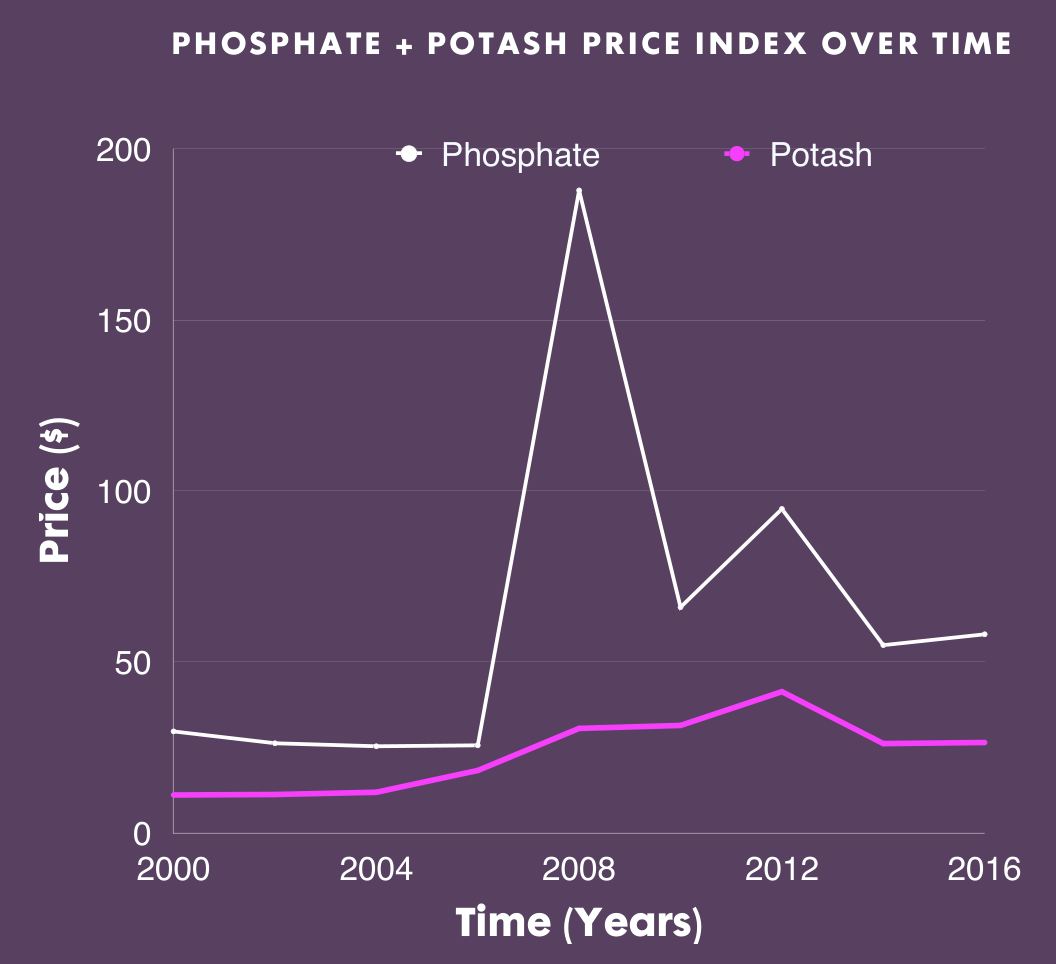
Over the last 15 years, the prices of common row crop fertilizers have become increasingly volatile.
The prices of the most commonly used fertilizers for row crops have experienced significant volatility in recent years. Phosphate prices spiked in 2008, increasing 648 percent in the span of just two years. This put pressure on farmers who were forced to figure out more efficient means of applying the fertilizer to their crops.
In the years after 2008, the cost of Phosphate has fallen back to a more manageable price. This means that there is less incentive for farmers to seek to save money on fertilizer. That said, the material cost of fertilizer is still one of the largest expenses for most farmers dealing in row crops.
Seed prices have spiked
Monsanto dominates the market for genetically modified seeds in the U.S. Their aggressive use of the U.S. patent system to prevent farmers from saving seeds has made the broader agriculture industry dependent on the company’s seed portfolio. This alongside the sheer cost of developing genetically modified seeds has forced a 300% increase in seed prices for key row crops like corn.
Irrigation factor for 15% of U.S. farms
For all the talk of water costs, irrigation is only a factor for 15% of U.S. farms. California has the highest percentage of irrigated farms, mostly driven by fear of drought rather than yield maximization.
Permanent crops: inputs
Almonds
- Hive for Pollination: Rental — $360 per acre
- Pesticide for Wood Flame Middles: Rental — $360 per acre
- Tree Shake + Sweep + Rake + pickup + Haul + Shell: Rental — $334 per acre
- Irrigation: Material Cost — $325 per acre
- Manure Compost Fertilization: Material Cost — $300 per acre
- Dormant Pest Spray: Material Cost — $206 per acre
- Pesticide Insect Mites: Material Cost — $127 per acre
- Winter Sanitation: Rental — $100 per acre
Grapes
- Pick + Field Pack: Labor Cost — $5,906 per acre
- Bags + Boxes: Material Cost — $3,760 per acre
- Sales + Marketing Commission: Rental — $2,736 per acre
- Spur Pruning Dormant Vines: Labor Cost — $1,546 per acre
- Fruit Exposure + Leaf Removal: Labor Cost — $1,546 per acre
- Late Spur Canopy Management: Labor Cost — $1,469 per acre
- Fruit Cluster Thinning: Labor Cost — $1,082 per acre
- Irrigation: Material Cost — $528 per acre
Oranges
- Packing: Rental — $2,668 per acre
- Pick + Haul: Rental — $926 per acre
- Compliance Cost: Cash Overhead — $356 per acre
- Frost Protection: Material Cost — $336 per acre
- Irrigation: Material Cost — $285 per acre
- Soil Amendment: Material Cost — $160 per acre
- Soil Amendment: Labor — $120 per acre
- Hand Pruning: Rental — $93 per acre
Labor cost is king
In extreme contrast to row crops, permanent crops are incredibly labor intensive. Though most tasks don’t require material input, activities ranging from pruning to picking have to be done by costly and increasingly scarce humans.
Picking, packing and marketing
Most orchards have arrangements whereby harvesting, transport and storage are handled by outside entities. These processes are extremely time consuming and capital intensive. The most expensive inputs are packaging machinery and physical bags and boxes for fruits and vegetables. Consumers continue to demand smaller, serving-sized packages that drive production costs. Larger farms may have the infrastructure to do these activities in house.
Pesticides
Permanent crops, which are traditionally a lot more expensive on a per-unit basis than row crops, also tend to face more risk from pests. Farmers must remain agile and aware of ever-changing threats to their farms.

Don’t forget the bees
Farms that need bees end up spending $200 per hive ($400 per acre) on bee hives for pollination. This makes bees a top, but often forgotten, cost.
Permanent crops: key trends
Wages are going up
Wages for farm workers are increasing, putting ever increasing pressure on farmers who must employ hundreds of workers to tend fields. States with large quantities of permanent crops, like California, also tend to be states pushing for aggressive increases in the minimum wage.
Unlike machines and seeds which have gotten much more productive over time to arguably justify increased costs, human farm workers have not kept pace.
Many field workers are undocumented
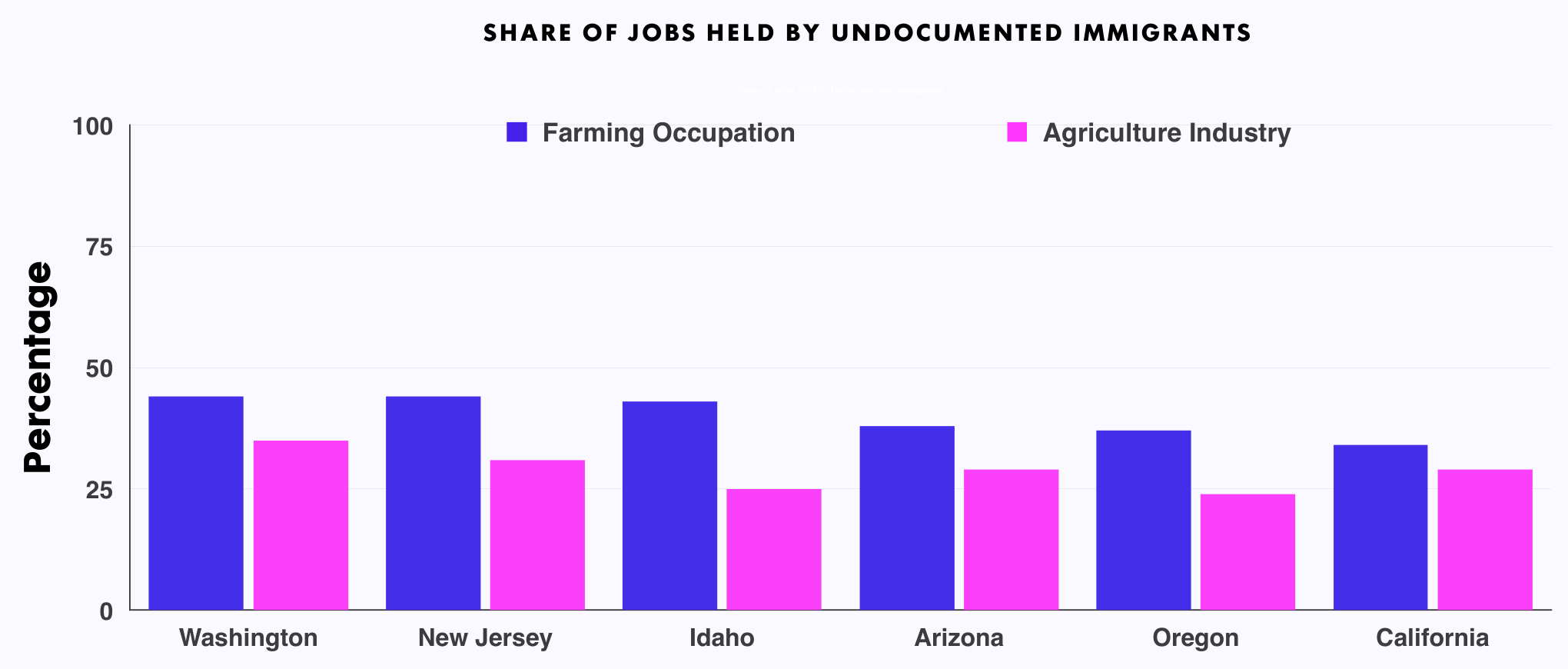
Five of the six states with the most undocumented immigrants working in farming are on the west coast where permanent crops dominate. In these states, nearly half of all nonsupervisory farm jobs are filled by undocumented immigrants.
With increasing political pressure to crack down on immigration, farmers are anxious that already painful labor shortages will only grow to become more of a problem.