/REPORTS
B2B Marketplaces

Introduction to B2B marketplaces
Two-sided marketplaces emerging across verticals
- Farming: Farmlead, Indigo, Crowd Cow
- Logistics: OFE, Shipamax, Cargomatic
- Factory: Sourcify, Anvyl, 3D Hubs
Even the largest players represent marginal GMV
- 80M bushels of grain transacted on Farmlead since 2014
- 21.3B bushels of U.S. corn, wheat and soy production in 2018
This is after removing brokers and increasing profits for both sides
In shipping, brokers take between $5,000 and $100,000 for matching a buyer and a seller.
It’s not just about reducing middle men and increasing margins!
Brokers
Market participants use brokers to mitigate risk
- Buyers care about: faster transactions; higher quality purchases; cheaper products
- Sellers care about: easier transactions; fulfillment flexibility; reduced financial risk; accessing new markets
Trading velocity increases when buyer and seller risk is mitigated, particularly in markets with significant information asymmetries.
Clearing houses
Clearing houses have played this role for decades
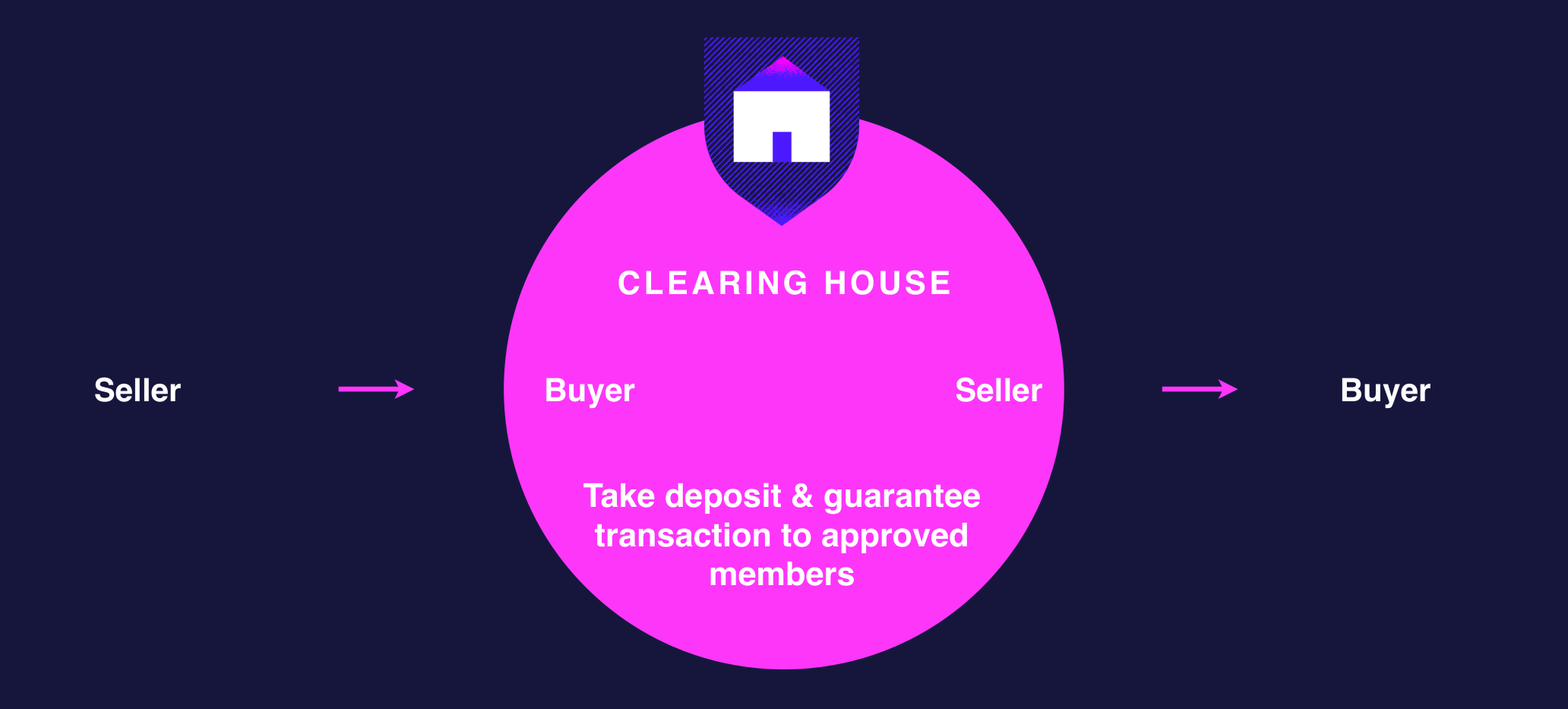
Risk mitigation is expensive but automation offers alternatives
- $$$: humans inspecting products; humans managing logistics; humans managing customs; humans insuring transactions
- $: computer vision; matching algorithms; standard documents; aggregated and pooled risk
Full stack 2.0
The financial case: full stack 2.0
- SaaS: 10X revenue multiple; assumption around margin 80%+. Low margin SaaS businesses trade with low multiples.
- Marketplace: 6X revenue multiple; alt: ~GMV with 10-15% take rate. Marketplaces without value-add struggle to justify high take rates.
Opportunity abound across industries
- Commodities
- Insurance
- Real estate
- Manufacturing
- Customs
- Logistics