Maritime Transport

- World container throughput growth is averaging between four and six percent per year.
- Ships are under massive pressure to flip cargo. Thousands of containers unloaded at each port per day.
- As international ports invest in automation, unions and expenses are holding US back from embracing modern marine transport practice
State of maritime transport
The United States lags
While key European and Asian ports have been investing in automation, the United States has not. The Port of Long Beach, the most important US port, is sinking $1.3 billion into a single automated terminal. Ports in Shanghai, Rotterdam, Singapore etc are already heavily automated with autonomous cranes and trucks that follow magnetic strips to move goods around the grounds of a port.
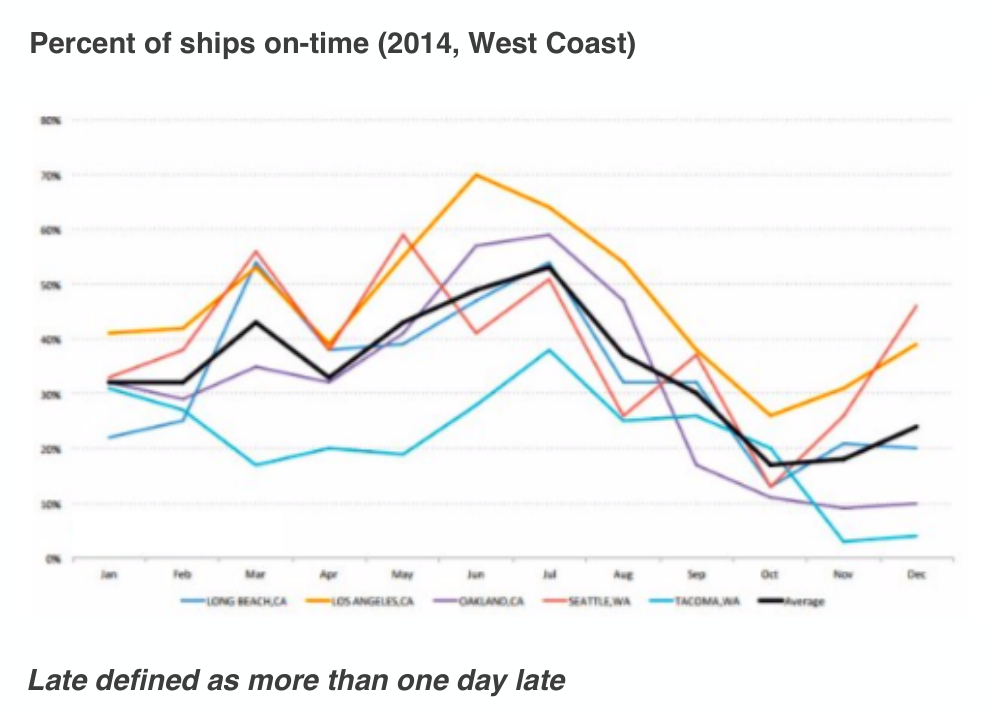
All of this means that a majority of shipments entering the United States through the West Coast arrive more than a day behind schedule. A lack of berths to accommodate large ships and slow turnaround times contribute to this.
Move to hub and spoke
Cargo ships are growing larger by the year. Bigger ships can hold more goods to accommodate demand at lower cost. These larger, heavier, ships require deeper ports and wider channels. Ports must innovate or be cut out.
The industry is moving from point-to-point shipping to hub-and-spoke because of the limited number of expensive ports capable of serving massive (aka post panamax) ships.
These hub ports, driven by massive national investment abroad, are where automation is taking hold first. Smaller ships can move goods locally when needed. Demand for these ships is also increasing.
Power of unions
The International Longshore and Warehouse Union is very powerful in the US and is staunchly opposed to automation. A few years ago, the union managed to shut down all ports on the US west coast for 11 days.
Automation is expected to destroy 50 percent of dockworker jobs. These jobs are incredibly lucrative due to unchallenged unions. Salaries often top $140,000 to $160,000 and come with six weeks paid vacation and top of the line healthcare and benefits. Unions have to agree to degrees of automation so often the ports don’t actually have control over upgrades.
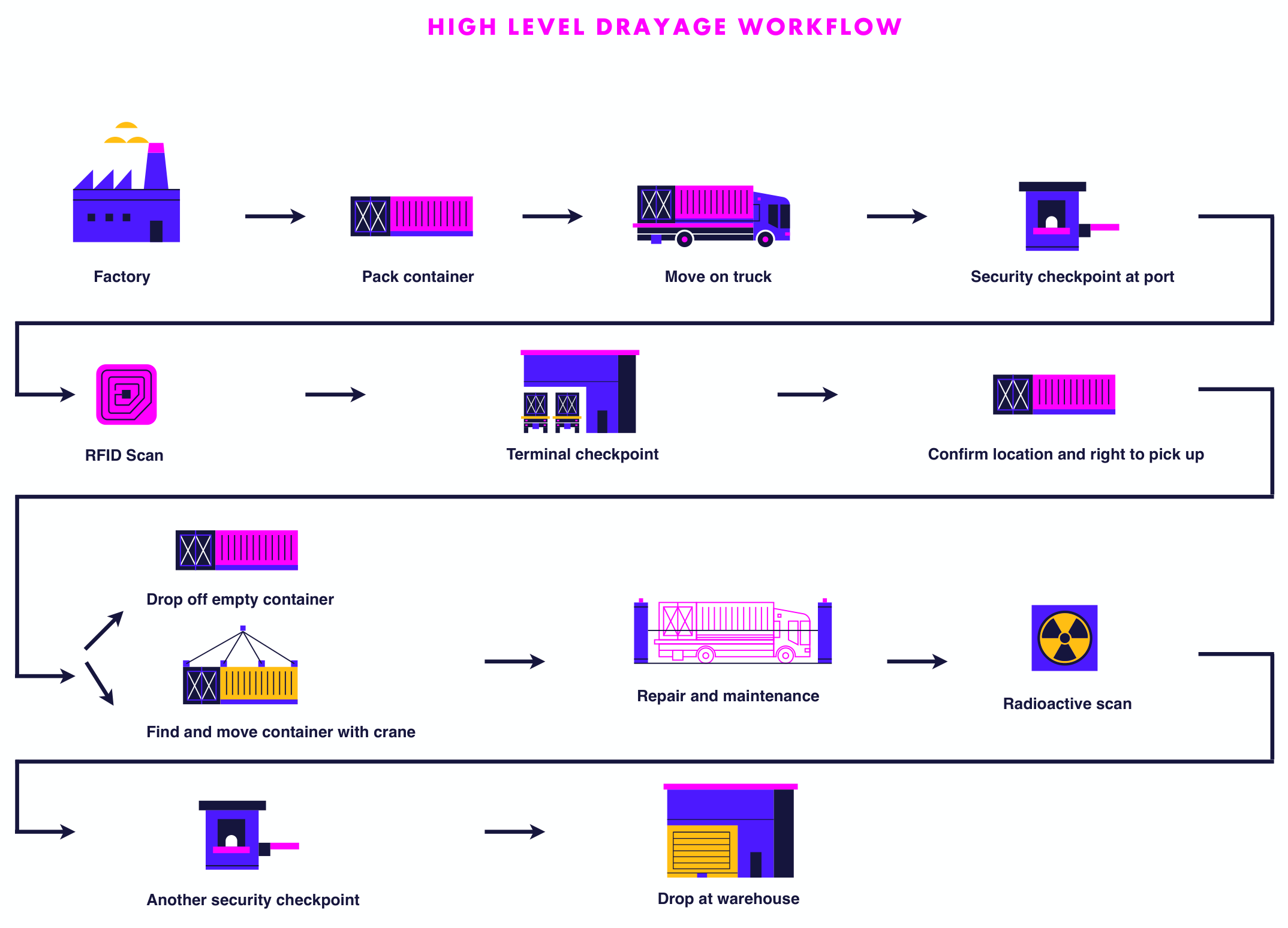
High level drayage workflow
The complexity of drayage
Drayage, or the process of moving goods small distance (i.e. to a warehouse) is particularly complicated in the shipping industry because of overlapping stakeholders.
In a US port, various security and governmental agencies like customs, the FBI and local police have to interface regularly with port operators and shippers.
This is further complicated by the various other stakeholder interests like merchants, trucking companies, contract workers and inspectors.
Additionally, complex and unstandardized rules across domestic and international ports make it hard to build a single solution that fits every workflow universally. This has given consulting firms footing in this specialized, niche, market.
Resulting dynamics
The result of these stakeholder interactions is a process that is very paper heavy. Each stakeholder needs to be able to share documents and ensure approvals are valid and timely. Small deviations in process coupled with mistakes can cause multi-hour and even multi-day delays in transport.
The drayage tech stack
Operations
- Maintenance platform
- Port management dashboard / Estrada for KPIs & reporting
- Weather monitoring
- Air quality monitoring
Container processing
- Document management + hyperledger
- Pickup/dropoff appointment management
- Container status/location
- Authorization management
- Legal processing
- Customs
- Fee processing
Security
- Cybersecurity
- Underwater ROVs
- TruckTag RFID + Clean Truck Database
- CCTV software + video monitoring
Hardware
- Radar
- $300,000 surveillance cameras
- Automated straddle carrier / magnetic strips
- Automated cranes and container locks
- Automated mooring / Cavotec
- Autonomous trucks/carts
- Hyperloop & dry ports
The problem with landlord ports
Today, most US ports are landlord ports. This means that they operate similar to airports. Port operators lease terminals to shipping companies to use for operations.
Because of this, even if a shipping company is investing in innovation, they are often shackled to inefficient ports.
Ports in general purchase what the government incentivizes them to purchase. Thus security has been one of the highest ranking items for spending since 9/11. These solutions can include cameras, undersea robots and RFID tags, emergency management tools, video feed monitoring and cybersecurity software.
Because ports lease terminals and shipping companies don’t own the infrastructure, improvements are generally port initiatives subsidized by the government. These multi-billion dollar projects have mostly occurred abroad but LA and Long Beach are investing heavily in automated hardware like cranes and autonomous vehicles.
Operations tools (workflow etc), container processing and hardware (automation) tend to be managed by legacy players. ABB has fulfilled major contracts for global ports. ArcGIS and consulting firms like Accenture provide port management software.
Operations tools are sold in packages and haven’t seen much innovation with the exception of air quality management. West coast ports are putting up $14 billion to cut down on pollution.
Blockchain deserves further research as a hot solution for document management. IBM is poised to capture significant portions of this market with early investment presuming market conditions hold and the company is able to bring its technology to market with enough stakeholder buy-in to ensure success.
High level shipping workflow
There aren’t very many major terminal operators
Four companies control a majority of global shipping operations.
- Maersk — 16.4%
- Mediterranean Shipping Company — 14.7%
- CMA CGM — 11.6%
- China COSCO — 8.4%
Each of these companies has been spending money on pilots with software companies to improve efficiencies. However in many cases, the shipping companies are at the mercy of the ports. A poorly operating port can quickly invalidate investments made by shipping companies.
Physical hardware innovation is being driven by companies in the automation space like ABB. Little to no machine learning is being used here with “old-school” magnetic tape and hard programmed cranes being popular.
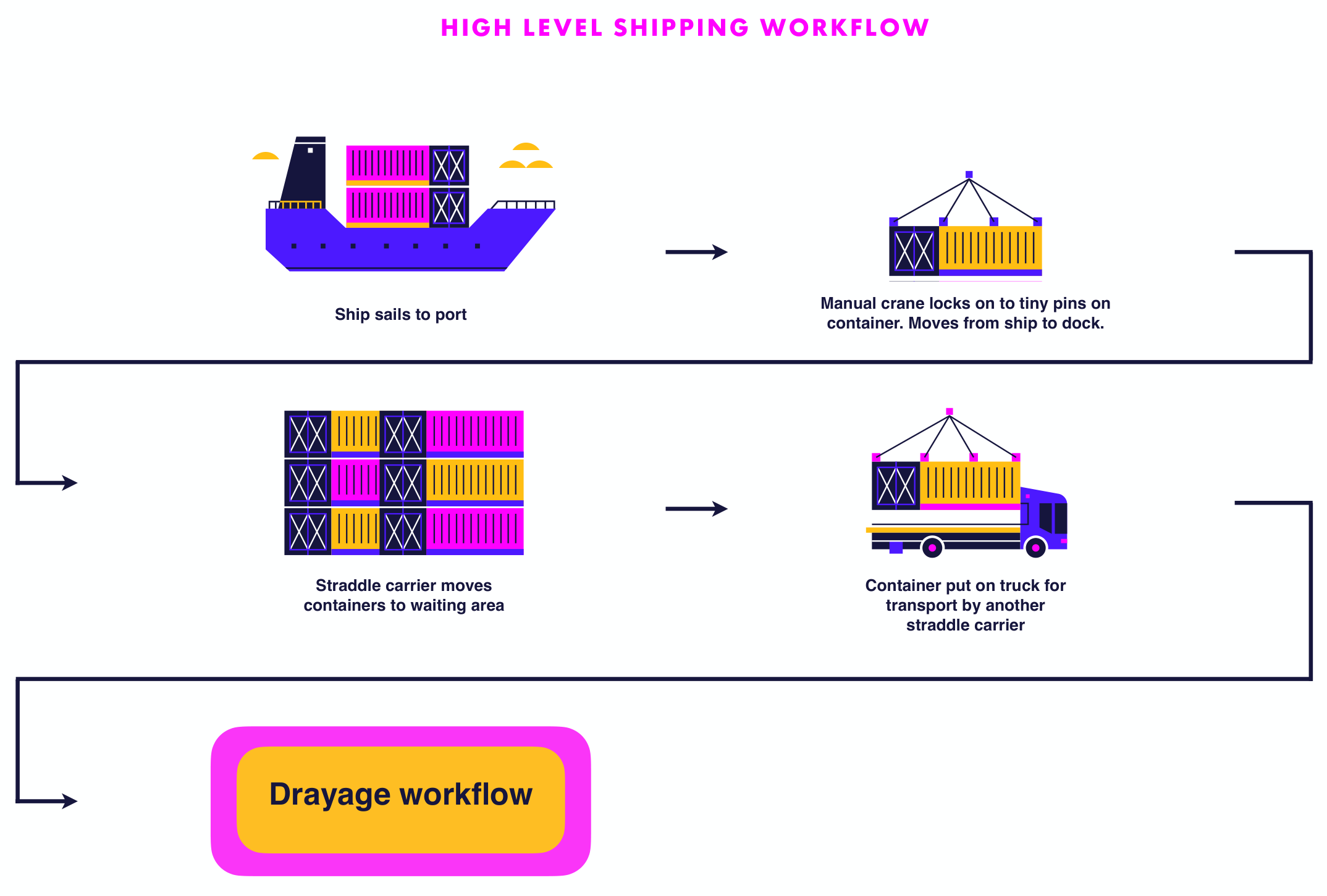
The crane in general is tough to automate because shipping containers are locked to each other and the deck aboard a ship. Even when automated cranes are used, humans often have to manually unlatch crates from each other and guide containers down so pins interlock when loading. Some work has been done to automate this process but it will take more R&D to flesh out.
Major inefficiencies exist in the unloading process where containers are taken off the ship in the order they were loaded. Containers are not pre-arranged in the order they will be picked up. This means a handful of containers often have to be moved to locate a target. The Port of Long Beach is working to address this problem with better processes but ground realities make it a tough order.
The shipping tech stack
Workflow & business admin
- Planned maintenance
- Dry deck management
- Crew management
- KPIs + analytics
- Reservations
- Cost planning
- Pricing
Infrastructure optimization software
- Fuel minimization
- Ship monitoring + IoT
- Online decision support system for port entry
Service optimization software
- Predictive logistics
- Container monitoring + IoT
- Route optimization
- Scheduling
- Capacity control
Compliance, regulatory & risk management
- Document management + hyperledger
- Safety management
- Customs clearance
- Cargo insurance
- Detention + demurrage
Startups are innovating in predictive logistics and document management
The hottest areas for startups in marine logistics include marketplaces, predictive logistics and document management.
Flexport has largely stolen the show with regards to pricing and marketplace efficiency. The company has raised $200 million to streamline the process of shipping goods by sea. This model has earned the moniker “Uber for shipping.”
Predictive logistics is just now emerging as a standalone software category. The space is being led by ClearMetal, a data analytics company using machine learning to better inform shipping companies about delays. There is room to expand into future optimization tasks like unloading goods from ships.
Lastly, blockchain is poised to save time and money for shipping companies by improving workflows for document management.
Technological progress is still early but it could eventually disrupt payments and compliance for shipping.
No startup has emerged to lead the pack, though large shipping companies like Maersk are working with IBM’s Hyperledger.
The Port of Rotterdam created its own startup accelerator and has backed a few blockchain startups focusing on supply chain coordination and document management.