Outsourced Services

Definition: Unbundling of domestic business functions.
Background
- Vertical disintegration of enterprise (change in build vs buy) has led to more value creation through decentralized production networks via b2b contracting.
- Old trend was toward vertical integration. It was believed that internal production was more efficient than contracting out. Throughout the 70s and 80s, advances in transportation and communications technology drove mass market and mass production optimization — i.e. economies of scale from processing large volumes of inputs through dedicated high fixed-cost machinery. Firms need steady supply of inputs and stable customer demand to support this production format.
- New trend is to focus on "core competencies" and outsource peripheral or low value tasks as well as higher value-added specialized functions. Technology has accelerated this process by allowing firms to outsource entire functions and more easily monitor contractors as well as employees who work virtually, leading to new forms of networked production and the rise of specialized firms.
Value to enterprises
Outsourcing shifts risk to contractors and can improve firm revenues. It also can enable more dynamic and/or large scale production at higher quality. Costs typically fall due to contractor efficiency, absorption of risk, investment in technology and payment of lower wages in non-union settings.

Impact on macro economy and employment
The share of payroll employment for domestically outsourced business services has increased from 7.3% to 13.9% since 1970. Half of this growth has been related to the technology industry with the rise of computer and technical consulting roles.
The other half is largely a result of outsourcing of low-skill work such as security services and temp staffing. In manufacturing, half of the workers needed for production of manufactured goods are employed outside of the manufacturing sector and a large portion of jobs added in the sector have come from outsourced production and services.
Why now?
Technology
Technology allows firms to achieve control over productive activities — the advantages of vertical integration — without assuming the risks of actual ownership or the inflexibility of bureaucracy.
Flexible manufacturing technologies allowed factories to produce a greater variety of goods in small batches, enabling decentralized production in specialized firms.
Lean production models developed in Asia, characterized by lead firms controlling manufacturing processes in a complex web of supplier firms achieved higher levels of innovation, lower time-to-market for new products, and higher quality and productivity than mass production models.
U.S. firms tried to emulate lean production by increasing their use of contracting and reconfiguring their supply chains. Technology lowers the costs of coordinating work across organizational boundaries, thereby reducing the cost advantages of internal production. Technology also enhances firms' capabilities to monitor external suppliers, thereby reducing the relative advantages of hierarchy.
Increasing modularity
The decomposition of complex processes into separable production elements enables firms to codify knowledge of a production process, identify separable parts, and standardize across organizations.
Heightened global competition
Globalization etc.
Deregulation of labor and capital markets
Growth in private equity, reduced protections for unions etc.
Shift of power from labor to capital
U.S. has a significant wage gap between unionized and non-unionized employees. Companies in competitive industries are especially incentivized to cut costs by outsourcing work to lower-cost non-union providers.
Impact on wages
Domestic outsourcing reduces low-skill wages overall as wages in the more open and transparent contractor market better match market wages. This then can have recursive pressure on companies to reduce wages for staff once market wages are better understood.
Studies have shown this to be true in the janitorial and security guard industries and data indicates that this is likely also true in logistics, cleaning and food service.
Inversely, wages for managerial and professional employees increase when employees move to specialized outsourced firms. Data from a study of dietitians in hospitals/schools vs outside firms backs this up. Moreover, nonstandard jobs are more prevalent at contractor firms, as is the case in call centers (1099 etc).
Types of contractors
- Suppliers or vendors of goods: Inputs (i.e. manufacturing); Services (i.e. staffing)
- Franchisees, and independent contractors: Freelancers; Independent consultants; On-demand platform workers
Types of outsourcing
- Capacity contracting: If firms operate in markets with high or uncertain demand fluctuation, they may outsource overflow work. This allows enterprises to meet increases in demand without investing in expensive equipment that may lie idle during economic downturns.
- Specialization contracting: If the production of particular products requires specialized inputs, companies may take advantage of contractors who have particular expertise or access to sophisticated technology.
- Supplier contracting: Companies can turn over large parts of the production process to an independent supplier. This can be a result of operational complexity and balance sheet benefits.
Outsourcing models
Hub and spoke model of contracting
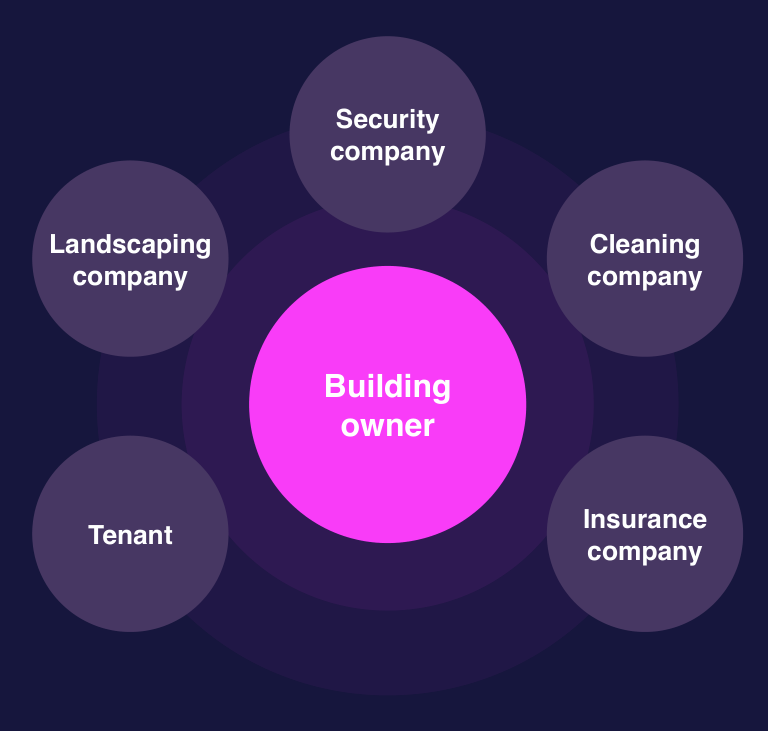
Lead firm contracts with a number of other firms for on-site services such as cleaning and security as well as off-site services such as insurance.
Nonhierarchical production network
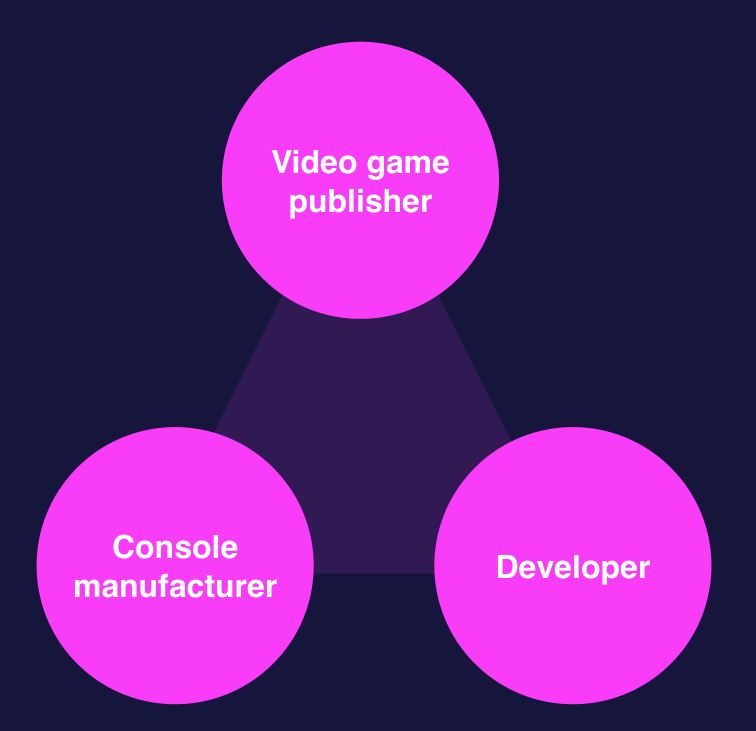
Continuous collaboration between firms of equal standing. This relationship can be seen in the video game industry with the relationship between video game publishers, console manufacturers, designers and software developers.
Pyramidal franchising structure
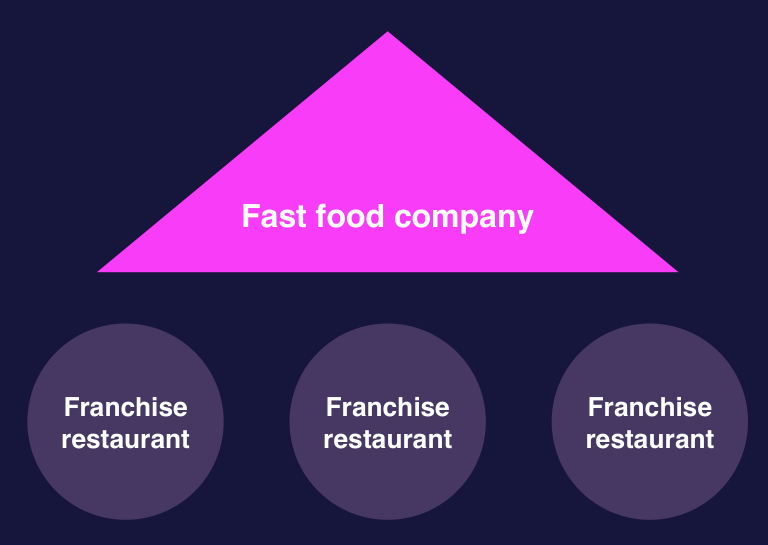
Central entity that outsources operations to licensees that typically handle operations at the ground level. Prevalent in fast food.
Linear supply chain
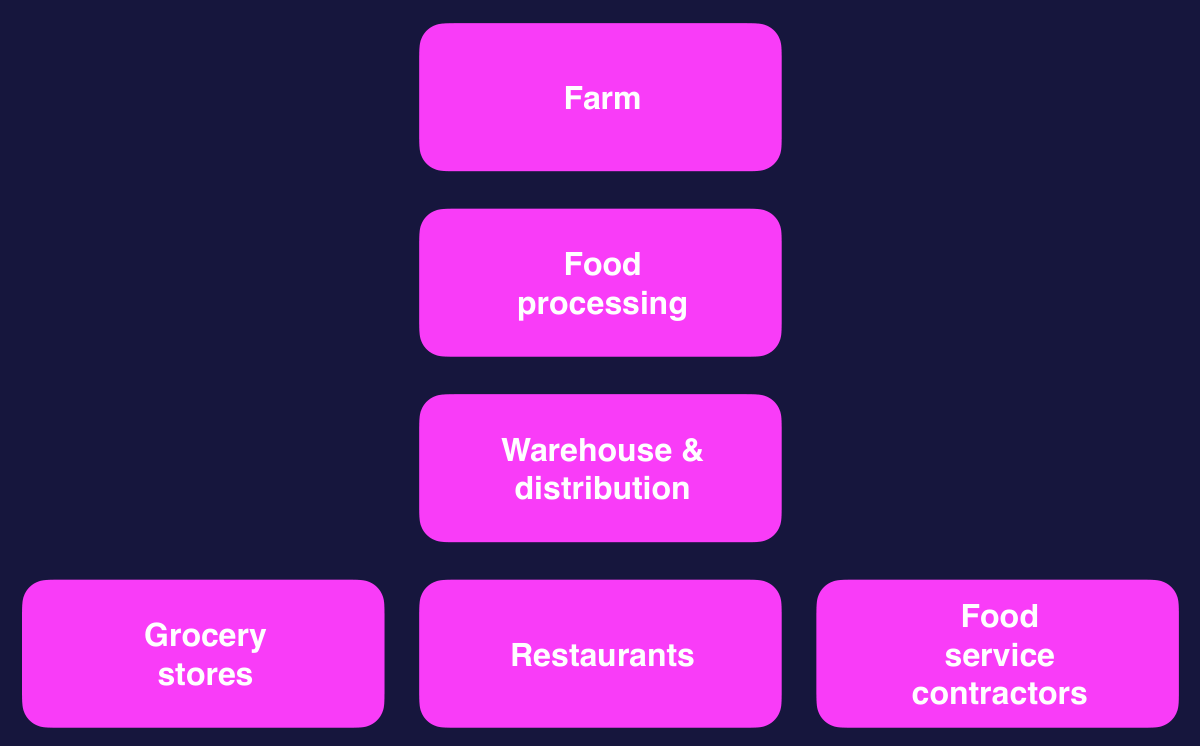
Classic linear firm-to-firm contracting. Most common structure for specialization.
Prevalence of outsourced activities
- Employee benefits administration/HR (90%): A majority of firms contract out at least some of their HR functions, including payroll and benefits administration, background checks, training, and recruitment. Zenefits.
- Legal services (85%): Atrium.
- Cafeteria services/food service/food processing (81%): ZeroCater.
- Janitorial and housekeeping (77%): Managed by Q.
- Security (61%): Deep Sentinel.
- Payroll processing (58%): Gusto.
- Loss control (47%): Vouch, Huckleberry.
- Facilities management (34 percent): Banner.
- IT systems (34 percent): IT services constitute an important share of services outsourcing, including data centers, help desk services, and training. Rippling, OfficeIQ.
- Transportation services/logistics (30 percent): Flexport.
- Sales and marketing (22 percent): Drum.
- R&D (20 percent)
- Management, administration and back-office functions: regulation/compliance/accounting etc (14 percent): Pilot.
- Customer service (12 percent)

Impact on startup ecosystem
For each sector there are three kinds of startup players:
- Thesis 1: Those that replace outside contractors "i.e. full-stack tech-enabled contractor."
- Thesis 2: Those that reduce the cost of insourcing such that outsourcing is no-longer justified.
- Thesis 3: Software tools that enable enterprises to better manage outsourced contractors. This dovetails into other remote work tools like video conferencing, document/data management, contractor performance guarantees etc.
Sectors most impacted by domestic outsourcing
Hyper-competitive and volatile markets or industries characterized by rapid innovation are most likely to benefit from domestic outsourcing.
- Health care: hospitals, outpatient facilities, nursing homes, home health care
- Logistics: transportation, warehousing, wholesale
- Professional and business services
- Computer and information technology
- Retail, restaurants, hotels, arts and entertainment
- Food supply chain
- Energy and utilities
- Finance, insurance, and real estate
- Pharmaceuticals, chemicals, and other bio-tech companies
- On-demand platforms: Uber, Upwork, TaskRabbit, etc.
- Public sector: federal, state, local
Logistics as a case study
Outsourcing has increased as a result of...
- Deregulation of freight transportation
- Developments in information technology
- Growth of complex global supply chains
This is seen in...
Shift to independent contractor drivers in trucking and the growth of delivery services such as FedEx based on that model
Increased contracting out of warehouses; and the rise of third-party logistics (3PL) companies to which businesses outsource the management, transportation, and storage of goods and information in their supply chains.
- Studies show a dramatic rise during the 1990s and 2000s in U.S. manufacturers' outsourcing of transportation and warehousing, once core functions of manufacturing firms.
- 3PLs now common in: retail, hospitality, food and beverage, construction, and energy.
- Large companies commonly use multiple 3PLs and hire a firm to manage outsourced logistics functions.
- Logistics outsourcing accounts for half of business spending on transportation and 40% of spending in warehousing.
Source: Upjohn Institute, Susan Houseman: Domestic Outsourcing in the United States: A Research Agenda to Assess Trends and Effects on Job Quality